
Applications
Water Treatment and Chemical Containment
Seamless lining options for basins, bunds, trenches and secondary containment areas.
Send project requirements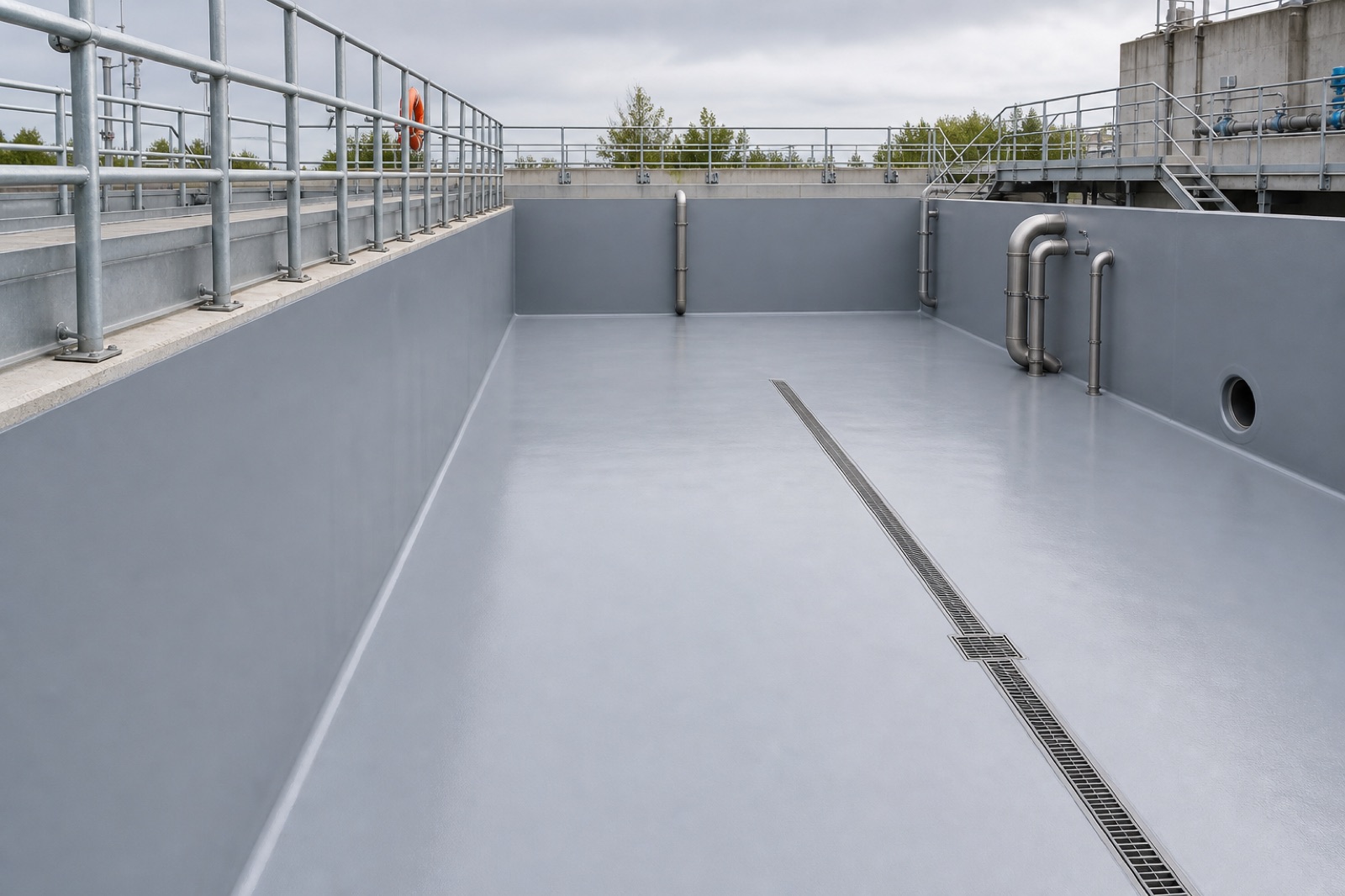
What the project needs to control
Immersion, chemicals, cracks, penetrations and movement joints can undermine a generic coating specification.
Recommended protection path
Select the formulation and detailing after reviewing the liquid, concentration, temperature, substrate and immersion cycle.
Assets and exposure conditions
- Concrete basins and process tanks
- Bunds and secondary containment areas
- Channels, sumps and drainage transitions
- Pipe penetrations, cracks and movement joints
How the risk develops
Immersion, chemicals, cracks, penetrations and movement joints can undermine a generic coating specification.
Moisture within concrete, negative pressure, cracking and chemically incompatible liquids can break adhesion or continuity. Most leaks begin at joints, penetrations and poorly repaired substrate defects.
Recommended system architecture
Select the formulation and detailing after reviewing the liquid, concentration, temperature, substrate and immersion cycle.
Record concrete age, strength, moisture and visible cracking.
Confirm chemical composition, concentration, pH and service temperature.
Design repairs, coves, penetrations and movement-joint transitions before lining.
Use hold points for substrate acceptance, primer, lining continuity and final inspection.
Configuration guide
| Project condition | Recommended path | Why it fits |
|---|---|---|
| Large basin or bund surfaces | Spray polyurea lining | Creates a fast, seamless lining across broad prepared areas. |
| Penetrations and repair zones | Brushable polyurea detailing | Provides controlled coverage around congested or irregular details. |
| Continuous immersion or chemical contact | Project-tested formulation | Chemical compatibility and immersion cycling must be reviewed before release. |
Delivery workflow
- 1
Survey substrate and exposure
- 2
Confirm repairs and surface preparation
- 3
Approve primer and application method
- 4
Apply coating and detail interfaces
- 5
Inspect, record and release the area
Inspection and project evidence
- Concrete moisture and repair acceptance
- Joint, penetration and cove detailing record
- Continuity, thickness and holiday inspection where specified
- Chemical compatibility and representative exposure review
Questions before specification
Can the lining be applied to damp concrete?
The acceptable moisture condition depends on the primer and system. Moisture testing and project-specific acceptance limits are required.
Does polyurea resist every chemical?
No. The exact liquid, concentration, temperature and contact cycle must be checked against the selected formulation.
Data needed for a project review
Provide chemical composition, pH, temperature, cleaning method, crack condition and expected service cycle.
Applications
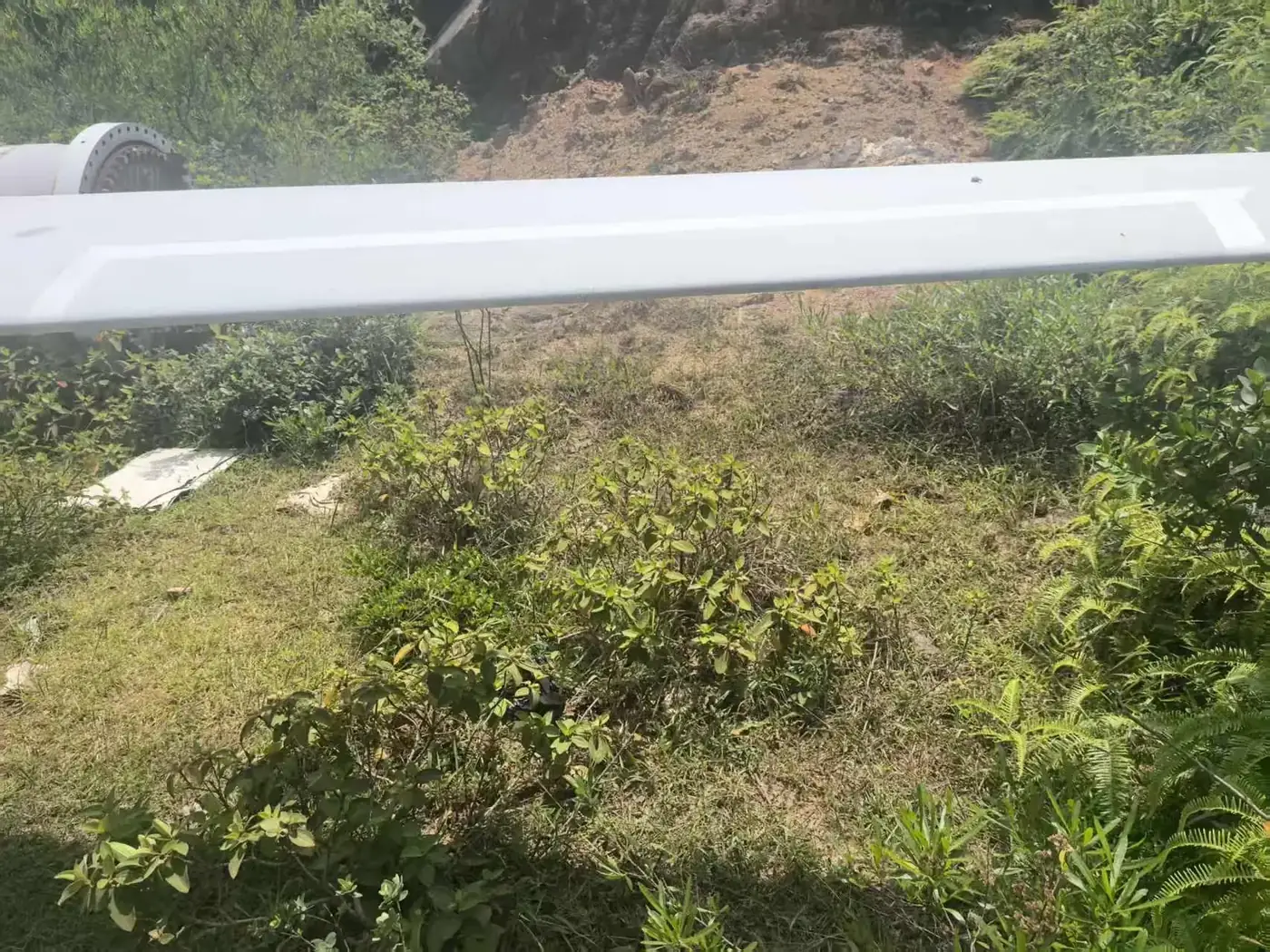
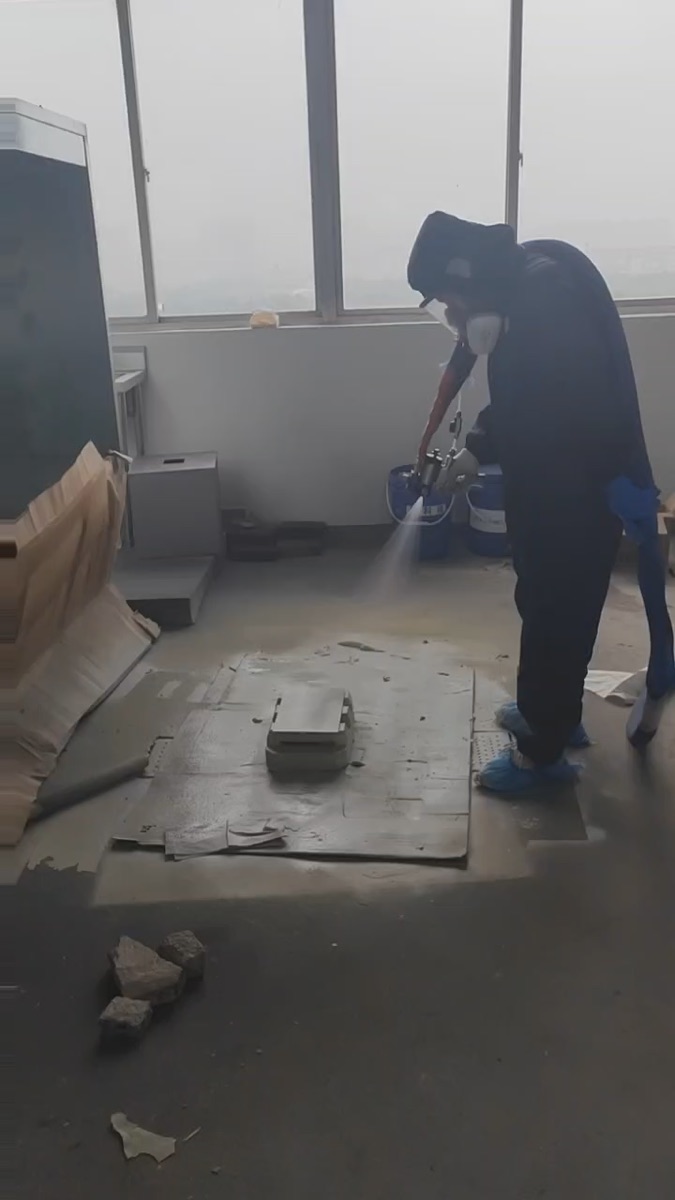
See the application from system to detail
Review the overall scene, equipment arrangement and key construction details before defining a project-specific system.
Related products
Spray Polyurea
Fast-setting, high-solids elastomeric coating for large surfaces and complex details.
Brushable Polyurea
Detail-oriented coating option for repair zones and sites where spray equipment is impractical.
Information needed for a focused recommendation
Substrate, existing coating, exposure, chemicals, operating temperature, access, target thickness and application schedule.