
Applications
Containerized Energy Storage
Layered detection, localized intervention, zone suppression and control linkage for BESS enclosures.
Send project requirements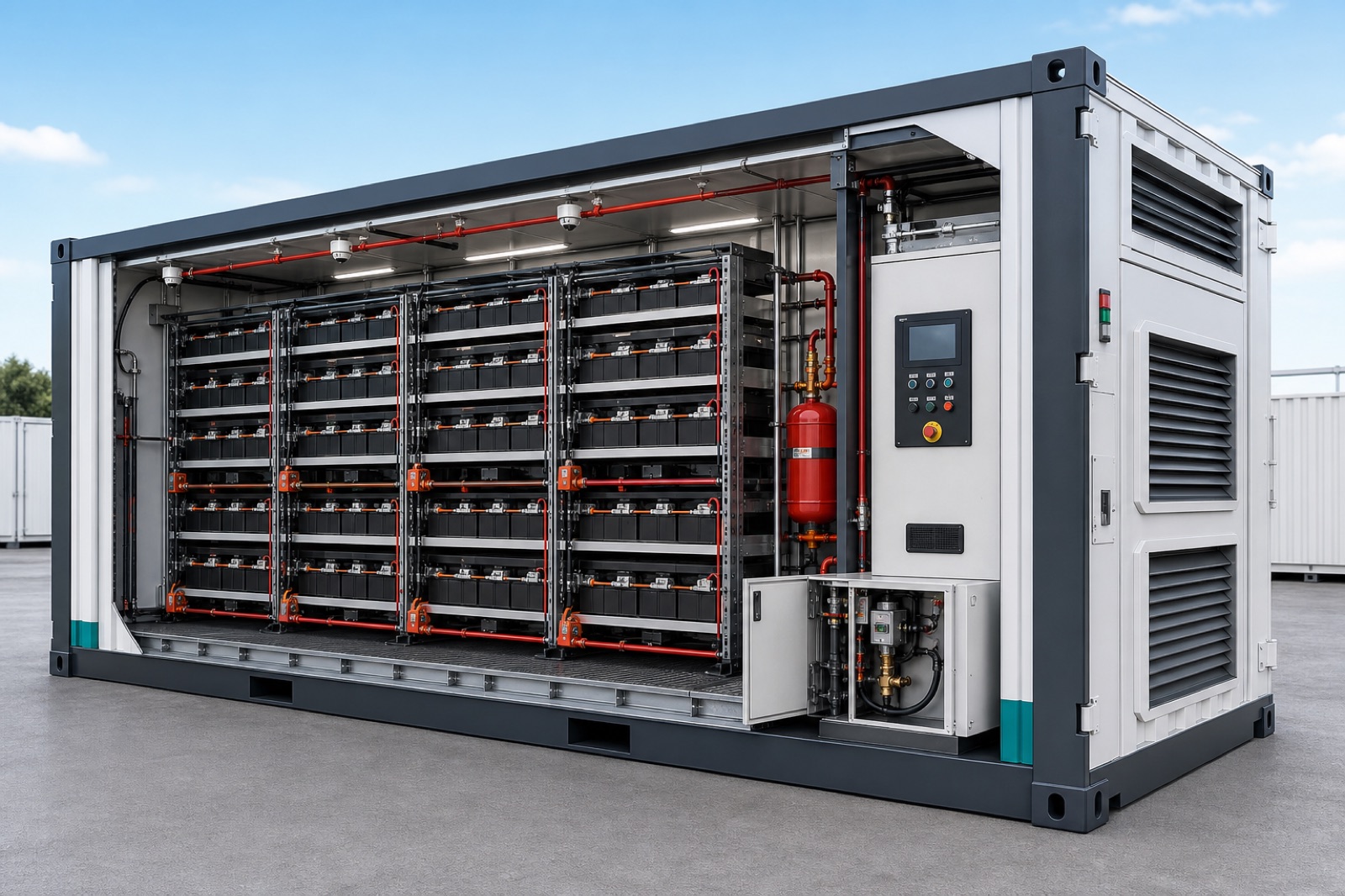
What the project needs to control
A cell abnormality can progress through off-gas, heat, smoke and propagation while ventilation and electrical states change.
Recommended protection path
Coordinate multi-parameter detection, PACK-level action, enclosure suppression, cooling and BMS/ventilation interfaces.
Assets and exposure conditions
- Battery racks and PACK enclosures
- Power conversion and electrical compartments
- HVAC, ventilation and pressure-relief paths
- Container alarm, shutdown and site-control interfaces
How the risk develops
A cell abnormality can progress through off-gas, heat, smoke and propagation while ventilation and electrical states change.
A cell abnormality can progress from off-gas and heat to smoke, propagation and enclosure escalation. Ventilation, electrical isolation and door state affect both detection and suppression performance.
Recommended system architecture
Coordinate multi-parameter detection, PACK-level action, enclosure suppression, cooling and BMS/ventilation interfaces.
Use multi-parameter detection where the project risk analysis requires earlier warning.
Place localized intervention close to the PACK or cabinet risk source.
Define an enclosure or zone-level suppression and cooling strategy.
Coordinate alarms, shutdown, HVAC and remote feedback through an agreed cause-and-effect matrix.
Configuration guide
| Project condition | Recommended path | Why it fits |
|---|---|---|
| Early abnormal condition | Multi-parameter detection | Adds gas, temperature, smoke or other project-selected signals before visible fire escalation. |
| Single PACK or cabinet event | Localized PACK-level intervention | Shortens the delivery path and limits dependence on enclosure mixing. |
| Escalation beyond local zone | Pump or stored-pressure zone suppression | Provides a coordinated enclosure-level response and cooling support. |
Delivery workflow
- 1
Map hazards and protection zones
- 2
Confirm detection and response logic
- 3
Select local and zone-level equipment
- 4
Integrate alarms, shutdown and ventilation
- 5
Commission, record and hand over the system
Inspection and project evidence
- Detector location and alarm-threshold review
- Nozzle, tubing and protected-volume verification
- Cause-and-effect test for shutdown, HVAC and feedback
- Commissioning record and representative project test plan
Questions before specification
Is one system suitable for every BESS container?
No. Cell chemistry, energy, rack geometry, ventilation, local code and emergency strategy change the design.
Does suppression remove the need for emergency planning?
No. Isolation, ventilation control, access, monitoring and emergency response remain part of the project.
Data needed for a project review
Provide chemistry, energy, rack layout, HVAC, detection philosophy, shutdown logic, local code and test requirements.
Applications
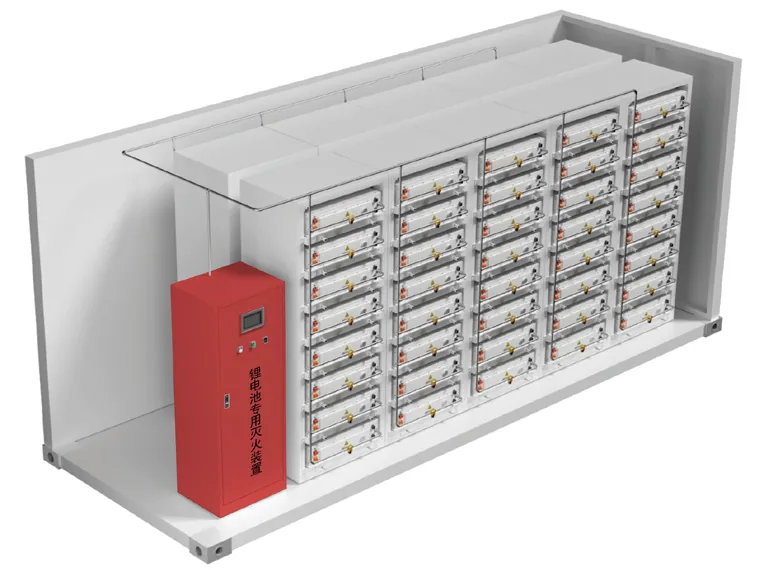
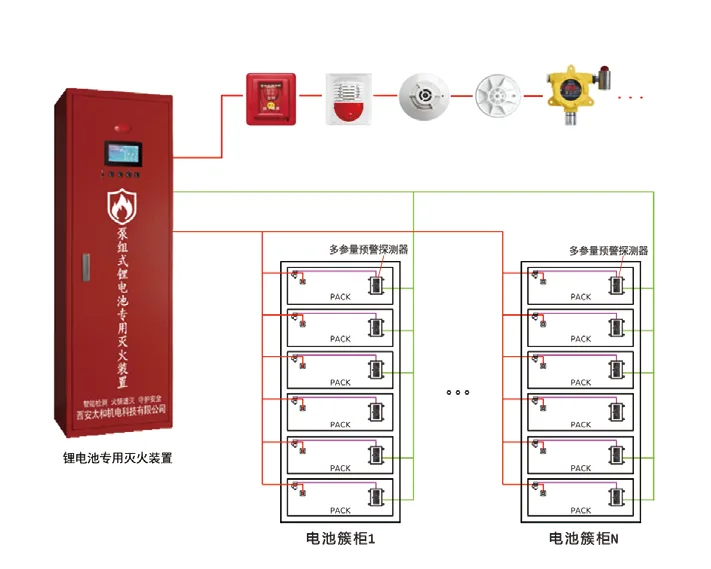
See the application from system to detail
Review the overall scene, equipment arrangement and key construction details before defining a project-specific system.
Watch the application response
Select a video to review the application sequence, equipment response and details relevant to an engineering discussion.
Related products
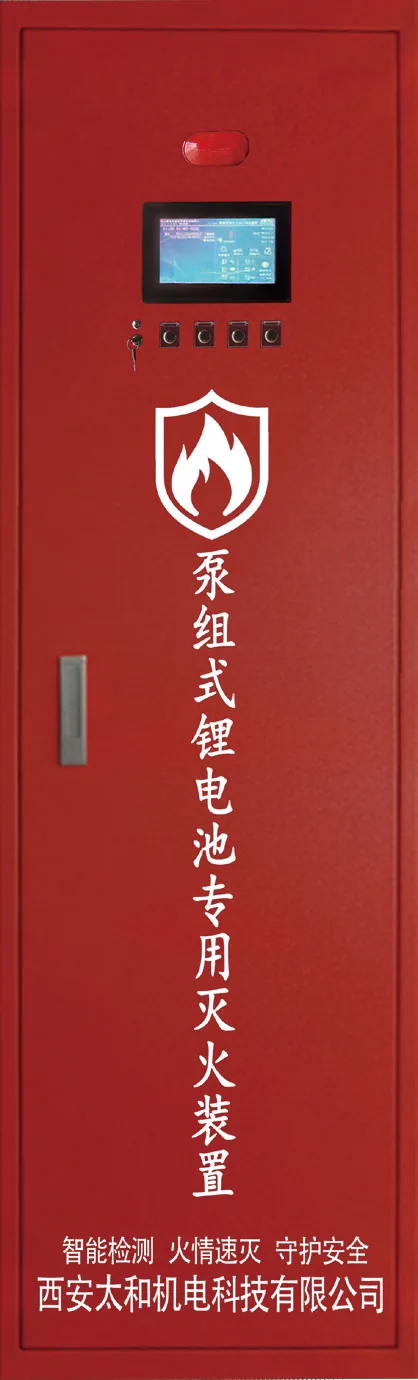
Pump Unit Fire Suppression System
Pumped extinguishing-agent delivery for configured energy storage fire zones.

Pressure-Storage Fire Suppression Device
Stored-pressure configuration for compact and direct extinguishing-agent discharge.
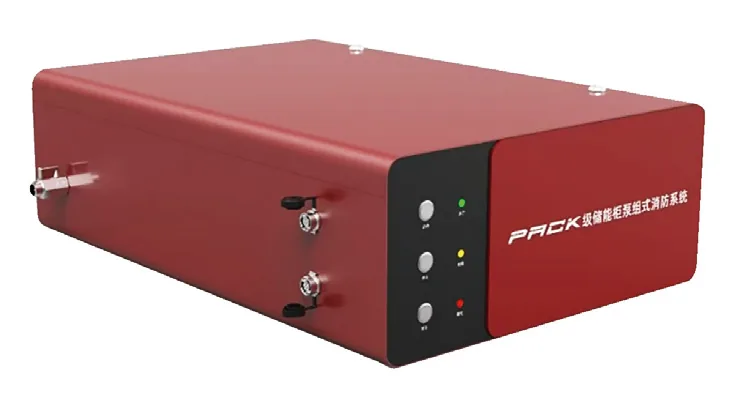
PACK-Level Fire Suppression Device
Localized device intended to intervene close to the battery pack risk source.
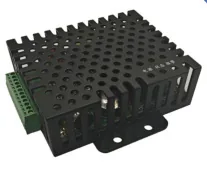
Early Warning Detection System
Multi-signal detection concept for earlier identification and coordinated response.
Information needed for a focused recommendation
Cell chemistry, capacity, enclosure and PACK layout, ventilation, detection philosophy, interfaces, ambient range and local code.