
Applications
Energy Storage Stations
Site-level architecture connecting enclosures, alarm zones, agent supply and remote supervision.
Send project requirements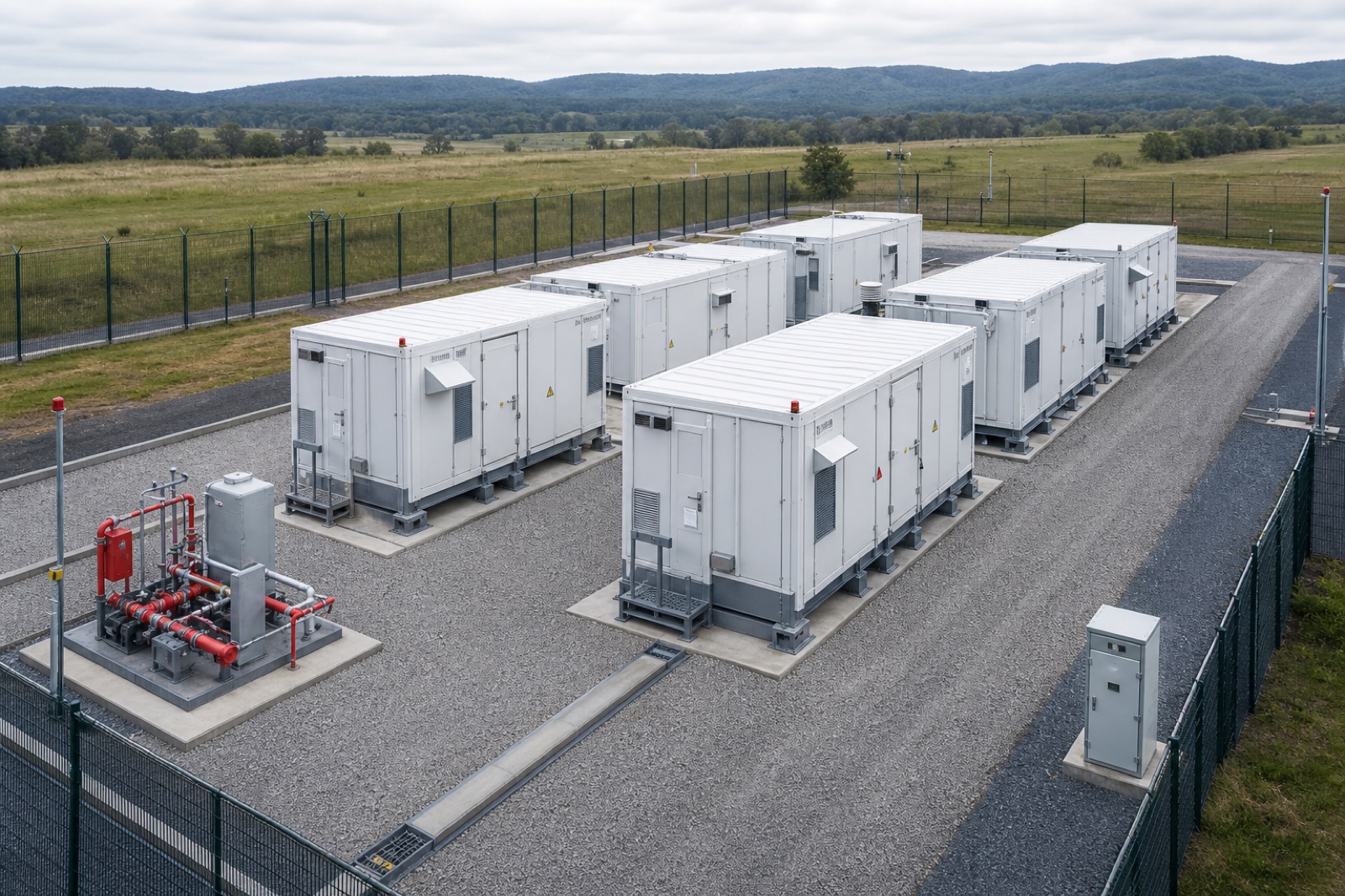
What the project needs to control
Multiple enclosures, shared utilities, wind, access and emergency response introduce site-wide dependencies.
Recommended protection path
Define zone boundaries, agent distribution, redundancy, alarm hierarchy and interfaces with station controls.
Assets and exposure conditions
- Multiple battery enclosures and transformer zones
- Shared agent, water, power and communication utilities
- Site roads, separation distances and emergency access
- Central alarm, station control and remote supervision
How the risk develops
Multiple enclosures, shared utilities, wind, access and emergency response introduce site-wide dependencies.
A station-level event is affected by enclosure spacing, wind, common utilities and emergency access. Local systems must report into a coherent alarm hierarchy without creating conflicting shutdown or ventilation actions.
Recommended system architecture
Define zone boundaries, agent distribution, redundancy, alarm hierarchy and interfaces with station controls.
Define fire and alarm zones from the site layout and separation strategy.
Select local, enclosure and shared-agent layers with suitable redundancy.
Map power, communication and water availability during abnormal conditions.
Coordinate station alarms, remote supervision and emergency response procedures.
Configuration guide
| Project condition | Recommended path | Why it fits |
|---|---|---|
| Independent container or cabinet | Local detection and intervention | Keeps first response close to the initiating enclosure. |
| Container group or shared hazard zone | Pump-unit or stored-pressure distribution | Supports zoned delivery across the station architecture. |
| Station control and emergency response | Central alarm and event feedback | Provides location, status and action signals for operators. |
Delivery workflow
- 1
Map hazards and protection zones
- 2
Confirm detection and response logic
- 3
Select local and zone-level equipment
- 4
Integrate alarms, shutdown and ventilation
- 5
Commission, record and hand over the system
Inspection and project evidence
- Zone boundaries and hydraulic or agent-distribution review
- Power, communication and redundancy test
- Alarm hierarchy and remote-event verification
- Emergency access, drainage and response drill inputs
Questions before specification
Should every enclosure operate independently?
Local independence is valuable, but alarm, shutdown and escalation logic must also be coordinated at station level.
What site information is required first?
A plot plan, enclosure count and spacing, utility availability, communication architecture and emergency strategy.
Data needed for a project review
Share the site layout, enclosure count, separation, water and power, communications, emergency plan and jurisdiction.
Applications
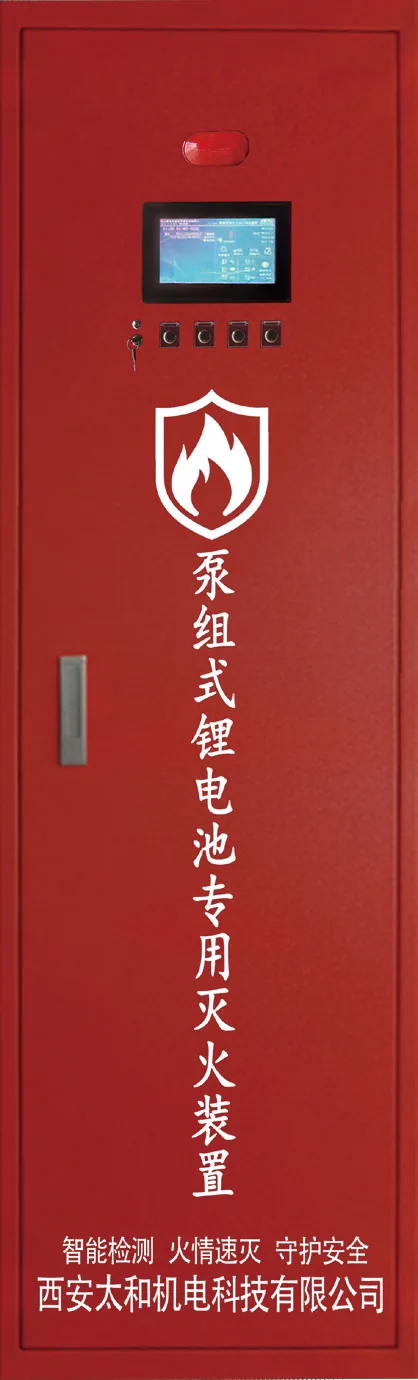
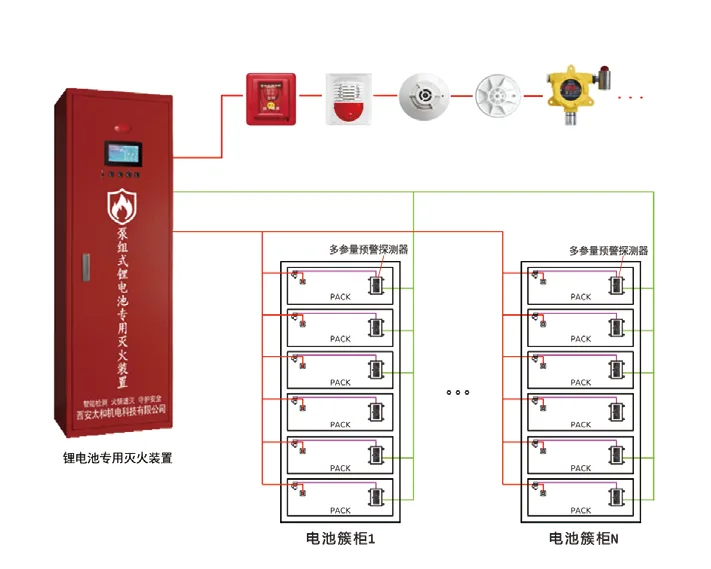
See the application from system to detail
Review the overall scene, equipment arrangement and key construction details before defining a project-specific system.
Related products
Pump Unit Fire Suppression System
Pumped extinguishing-agent delivery for configured energy storage fire zones.

Pressure-Storage Fire Suppression Device
Stored-pressure configuration for compact and direct extinguishing-agent discharge.
Water-Based Lithium Battery Extinguishing Agent
Liquid agent option intended for cooling and suppression in configured lithium battery scenarios.
Early Warning Detection System
Multi-signal detection concept for earlier identification and coordinated response.
Information needed for a focused recommendation
Cell chemistry, capacity, enclosure and PACK layout, ventilation, detection philosophy, interfaces, ambient range and local code.